
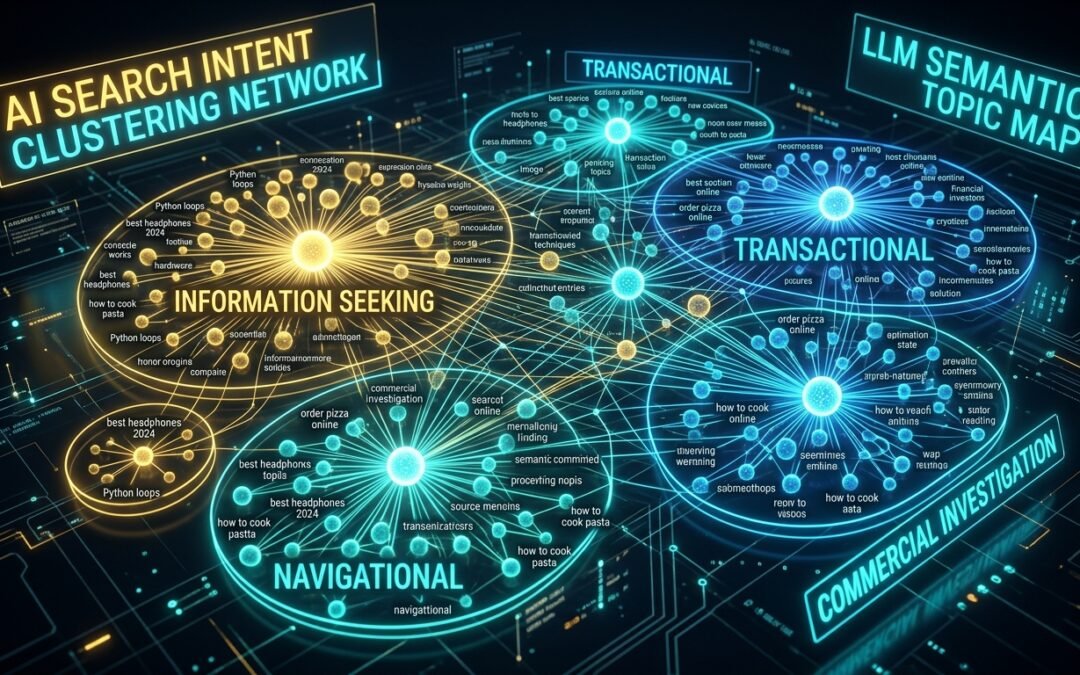
Ai Search Intent Clustering 2026 represents a fundamental shift in how digital growth teams structure content architecture, organize editorial calendars, and scale revenue across search engines. Traditional keyword research relied on static search volume metrics, manual spreadsheet sorting, and rigid phrase matching. In contrast, artificial intelligence systems evaluate real-time user intent signals, vector embeddings, and contextual search patterns to deliver direct answers within Google AI Overviews and Perplexity summaries.
Growth marketing teams that adapt to this architectural shift build compounding topical authority across digital channels. Organizations clinging to legacy single-keyword playbooks face escalating customer acquisition costs and declining organic search visibility.
Direct Answer Snippet
Ai Search Intent Clustering 2026 refers to the continuous integration of large language model vector embeddings and machine learning algorithms into search engine optimization workflows. This methodology groups thousands of related user search queries into semantic intent clusters, allowing brands to dominate Google AI Overviews, eliminate internal keyword cannibalization, and construct comprehensive pillar-cluster content hubs.
Key Takeaways
- Search engine discovery has transitioned from matching literal keyword strings to parsing multi-dimensional semantic vector spaces.
- Natural language processing models evaluate cosine similarity between search queries, identifying hidden intent connections that manual research tools overlook.
- Building pillar-cluster content hubs around structured intent groups improves website crawl efficiency and strengthens overall topical authority scores.
- Direct passage-level answers embedded in the first two sentences under every heading are mandatory for capturing visibility inside Google AI Overviews.
- High-performing growth teams utilize automated intent clustering pipelines for data ingestion while retaining human strategy for brand positioning and editorial review.
The Architectural Shift to Ai Search Intent Clustering 2026
Understanding why legacy keyword research fails in modern generative search requires examining how search algorithms process user queries. Search engines no longer serve simply as index lists of external hyperlinks. They operate as direct synthesis engines that read, summarize, and resolve search intent right on the search results page.
1. Vector Embeddings vs Static Keyword Lists
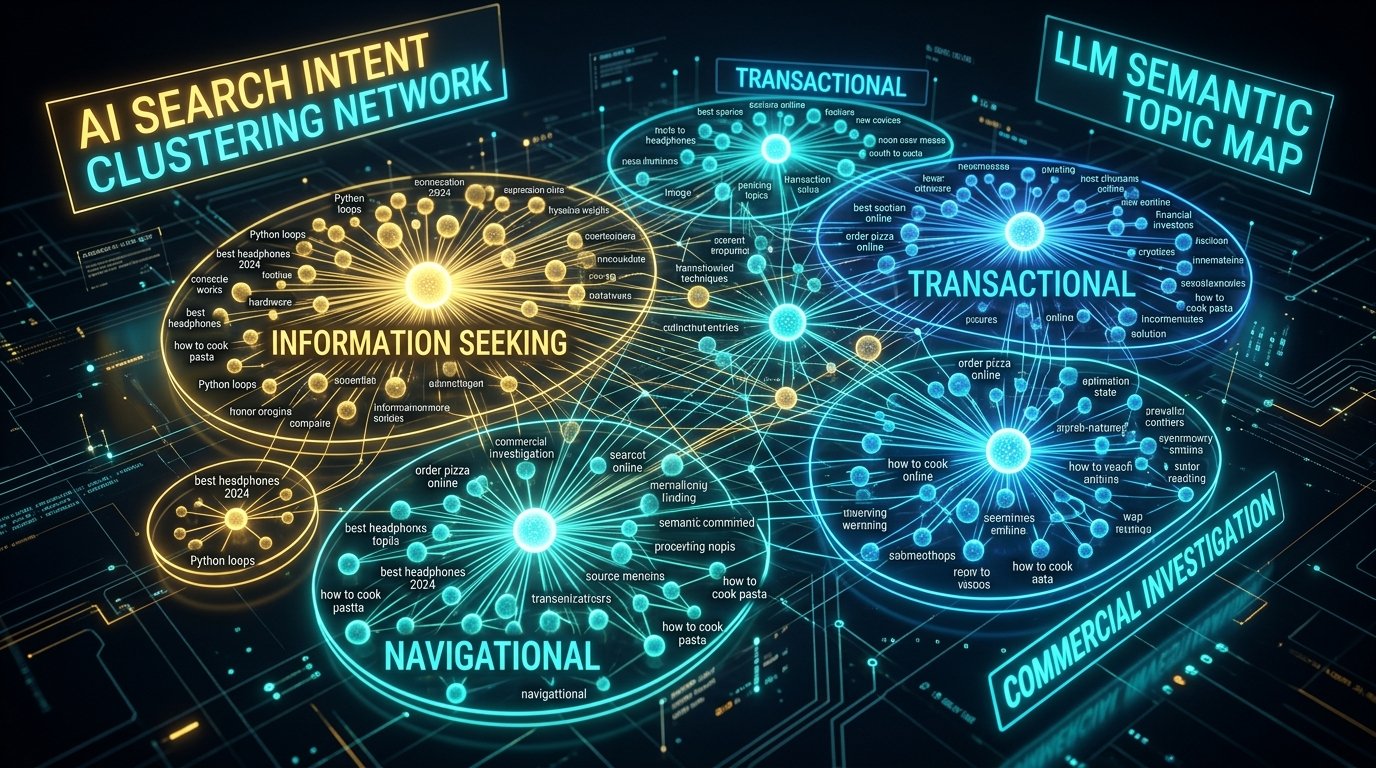
Search engines parse text by converting words and search queries into multi-dimensional mathematical vectors. Queries that share similar vector coordinates represent identical buyer intent, even if they use entirely different vocabulary.
For example, a user searching “how to calculate customer acquisition cost” and another user typing “CAC formula digital marketing” share near-identical vector embeddings. Creating separate articles for these terms creates internal keyword cannibalization. Intent clustering consolidates these variations into a single master guide.
2. Algorithmic Data Processing at Scale
Modern SEO operations require analyzing tens of thousands of search queries across web analytics, competitor sitemaps, and search console reports. Human SEO managers cannot manually classify hourly search query fluctuations across multiple categories simultaneously.
Machine learning algorithms process complex query datasets continuously, detecting emerging intent clusters and content gaps in real time. This capability frees strategic teams to focus on brand messaging, proprietary data collection, and visual creative design.
3. Evaluating Model Architecture for Intent Analysis
Growth teams must understand how distinct natural language models evaluate search intent. Transformer models excel at parsing unstructured natural language queries from customer support chats, search boxes, and community discussions. Classification algorithms categorize lead records by intent score, allowing content teams to prioritize commercial conversion topics immediately.
Integrating intent model scores directly into editorial planning ensures content creators address high-converting topics first, rather than prioritizing generic high-volume head terms.
4. Technical Requirements for Generative Answer Discovery
Search engine crawlers evaluate web infrastructure quality before fetching content for AI answer engines. Sites with slow initial server response times or missing structured markup are systematically filtered out of generative summaries.
Marketers must audit core web vitals, implement clean semantic HTML elements, and verify schema validation using testing tools to maintain search indexing priority across digital properties.
| Feature Category | Legacy Search Optimization | Ai Search Intent Clustering 2026 |
|---|---|---|
| Data Ingestion | Static monthly volume counts | Multi-dimensional vector embeddings |
| Grouping Method | Manual spreadsheet filtering | Algorithmic machine-learning clustering |
| Content Structure | Isolated single-keyword posts | Interlinked pillar-cluster networks |
| Search Target | Ten blue links on SERP | Google AI Overviews & Perplexity |
| Authority Focus | Exact-match anchor text | Comprehensive topical coverage |
| Optimization Focus | Keyword density matching | Topical authority & answer extraction |
Core Implementation Strategies for Ai Search Intent Clustering 2026
Executing an effective strategy requires systematic implementation across content creation, search architecture, and analytics infrastructure.
Strategy 1: Architecting Content for Answer Engine Extraction
Answer Engine Optimization requires structuring web content so generative models can extract factual passages cleanly. Every major section should begin with a direct definition or solution before providing context or nuance.
- Clear Header Hierarchy: Use logical H2 and H3 tags written as direct questions that prospective buyers search online.
- Data-Rich Markdown Tables: Generative models extract comparative tables cleanly when building comparative buying answers for searchers.
- Structured Entity References: Explicitly state tool names, software specifications, and numerical benchmarks rather than using generic terminology.
- Verifiable Industry Quotes: Cite credible authoritative sources like Google Search Central and industry research reports from Gartner to establish high experience, expertise, authority, and trust ratings.
Strategy 2: Automating Creative Testing and Content Production
Scaling campaign output without diminishing brand quality requires building structured editorial guardrails. AI generation tools must operate within strict brand guidelines to avoid generic phrasing and repetitive sentence structures.
- Establish strict quality rules that eliminate banned corporate jargon and generic fluff phrases.
- Require human review for all facts, numerical statistics, and technical implementation steps before publication.
- Combine generative tools with custom visual banner pipelines to maintain visual brand identity across published posts.
- Monitor organic content performance weekly to prune outdated statistics and refresh published guides.
Strategy 3: Deploying Predictive Analytics for Ad Capital Allocation
Paid search channels rely on intent signal data to optimize conversion paths. Integrating intent clustering with paid acquisition allows marketers to align search ad copy directly with organic pillar clusters.
When search ad campaigns target tightly grouped intent clusters rather than broad match keywords, click-through rates increase and customer acquisition costs drop significantly. Growth teams should configure automated triggers that reallocate ad budgets toward top-performing intent clusters.
Strategy 4: Privacy-First Server-Side Data Attribution
Privacy restrictions like Apple App Tracking Transparency and browser cookie deprecation have degraded client-side tracking accuracy. Modern tracking architectures utilize server-side tracking pipelines to pass verified conversion events directly from backend servers to analytics engines.
By combining server-side data ingestion with machine-learning attribution models, brands gain accurate multi-touch insights without compromising user data privacy rules.
Strategy 5: Building Dynamic Custom Audience Segments
Legacy audience targeting relied on broad static lists updated monthly. Modern predictive platforms evaluate real-time website search query streams to generate dynamic buyer cohorts.
When a user reads articles across pricing and comparison intent clusters within forty-eight hours, automated triggers add the user to high-intent nurture campaigns across email and retargeting channels instantly.
Strategy 6: Establishing Multimodal Creative Production Pipelines
Modern digital marketing relies heavily on visually compelling banner graphics and visual diagrams. Growth teams generate high-resolution visual diagrams representing data workflows, combine them with founder portrait photography, and render platform-specific visual banners automatically.
Testing distinct visual banner designs speeds up click-through optimization, allowing teams to scale top-performing creative angles across search and social channels.
Step-by-Step Implementation Framework for Ai Search Intent Clustering 2026
Executing a complete operational transition involves four distinct implementation phases over a ninety-day timeline.
Phase 1: Ingestion and Intent Audit (Days 1 to 30)
Begin by extracting raw query data from Google Search Console, analytics platforms, and customer support logs. Run vector embedding models to map existing site pages against active intent clusters.
Identify instances of keyword cannibalization where multiple pages compete for identical vector coordinates. Plan content consolidation steps to merge overlapping articles into comprehensive pillar resources.
Conduct a comprehensive technical audit to identify broken internal links, slow loading assets, and missing meta tags. Fixing technical debt during Phase 1 ensures subsequent content investments yield maximum search indexing performance.
Phase 2: Sitemap Restructuring and Schema Setup (Days 31 to 60)
Publish standardized guidelines for editorial style, brand voice, and technical accuracy. Implement automated QA validators to scan all drafted articles for banned AI phrasing, formatting errors, and missing schema markup.
Integrate structured JSON-LD Article and FAQPage schema into your website template header. This ensures search engine crawlers interpret content architecture accurately.
Train content creation teams on proper prompt engineering techniques, factual verification routines, and custom image creation workflows. Establishing clean operational templates prevents bottlenecking during editorial production.
Phase 3: Automated Clustering and Content Execution (Days 61 to 90)
Roll out automated intent clustering scripts to process incoming search queries weekly. Build dedicated subtopic pages that interlink seamlessly with core pillar content.
Establish weekly review routines where strategy leads evaluate search rankings, refine cluster boundaries, and update internal linking structures based on organic impressions.
Integrate real-time reporting dashboards that track organic impressions in AI answer engines alongside lead acquisition metrics. Consolidated dashboards provide leadership with clear visibility into search performance.
Phase 4: Continuous Optimization and Scaling (Days 91+)
After initial deployment, transition to continuous incremental testing. Refresh historical organic blog posts with updated research figures, add new subtopic articles to growing intent clusters, and expand automated email nurture flows.
Maintain strict governance over data security and customer privacy as new machine learning integrations are added to your marketing tech stack.
Common Mistakes to Avoid in Ai Search Intent Clustering 2026
- Publishing Raw AI Outputs: Publishing unedited machine output damages brand reputation, introduces factual errors, and risks algorithmic search penalties.
- Ignoring First-Party Data Systems: AI models depend on high-quality input data. Failing to clean CRM contact records produces inaccurate predictive customer modeling.
- Over-Relying on Keyword Density: Modern search algorithms prioritize topical depth and query resolution over mechanical keyword repetition.
- Neglecting Visual Brand Identity: Stock images and generic graphic templates decrease user engagement. Custom, high-contrast banner graphics improve social click-through rates.
- Failing to Monitor Schema Markup: Malformed JSON-LD scripts prevent search engines from extracting structured article and FAQ metadata.
- Operating Without Human QA Review: Completely removing human oversight leads to messaging errors, broken brand compliance, and inaccurate product claims.
- Failing to Track First-Party Conversions: Relying solely on client-side pixel tracking creates massive attribution blind spots across paid acquisition campaigns.
Advanced Technical Blueprint for Growth Marketers
To maximize efficiency, engineering and marketing teams must collaborate on technical data pipelines. Connecting marketing APIs directly to cloud data warehouses enables automated reporting and real-time campaign optimization.
+------------------+     +-------------------+     +--------------------+
|  Website Events  | --> | Server Conversions| --> | Meta / Google CAPI |
| (First-Party Data|     | Pipeline (Node/Py)|     | Ad Network APIs    |
+------------------+     +-------------------+     +--------------------+
This server-side architecture bypasses browser ad blockers, preserves customer privacy compliance, and delivers precise attribution metrics back to media buying platforms.
Frequently Asked Questions
What is ai search intent clustering 2026?
Ai Search Intent Clustering 2026 is the practice of combining machine learning algorithms, vector embeddings, and structured content architecture to group related search queries, improve organic search visibility, and build topical authority.
How does generative search differ from traditional Google search?
Traditional search returns list summaries of web links based on crawling indexes. Generative search synthesizes direct conversational answers on the search results page using natural language models trained on web content.
Why is structured schema markup critical for search ranking?
Schema markup provides search engine bots with unambiguous machine-readable metadata regarding article authors, publishers, product pricing, and structured question-and-answer pairs.
Can automated tools replace human digital marketers?
No. Automated tools execute data analysis, draft synthesis, and routine task execution efficiently, but strategic direction, brand positioning, creative nuances, and human empathy remain essential for marketing success.
How do marketers measure success in AI-driven campaigns?
Success is measured through organic impression share inside AI answer engines, qualified lead acquisition velocity, customer lifetime value expansion, and return on ad spend lift.
In-depth strategic guides perform best between 2000 and 3000 words when supported by clear subheadings, comparison data tables, verified external citations, and structured FAQ sections.
How often should digital marketing strategies be updated?
Digital marketing strategies should be reviewed quarterly to accommodate continuous search engine algorithm updates, advertising platform policy updates, and emerging technology tools.
What tools are essential for building AI marketing pipelines?
Core tools include Google Analytics 4, server-side tracking pipelines, large language model APIs, automated banner composition tools, and Rank Math SEO plugins for WordPress.
Conclusion
Adopting ai search intent clustering 2026 is no longer an optional experimentation channel for growth-minded organizations. The rapid migration of search traffic to AI answer engines and the necessity of privacy-safe attribution require a modern marketing approach.
By building structured content pipelines, deploying server-side data tracking, and maintaining strict brand standards, your team can capture market share while competitors struggle with legacy playbooks. Focus on delivering genuine utility, clear data insights, and structured answers to establish long-term industry authority.